Beyond Efficiency: Why Circularity Is Australian Dairy’s Next Productivity Reform
“The value of natural resources is determined not by how much enters the system, but by how many times those resources create value before leaving it.”
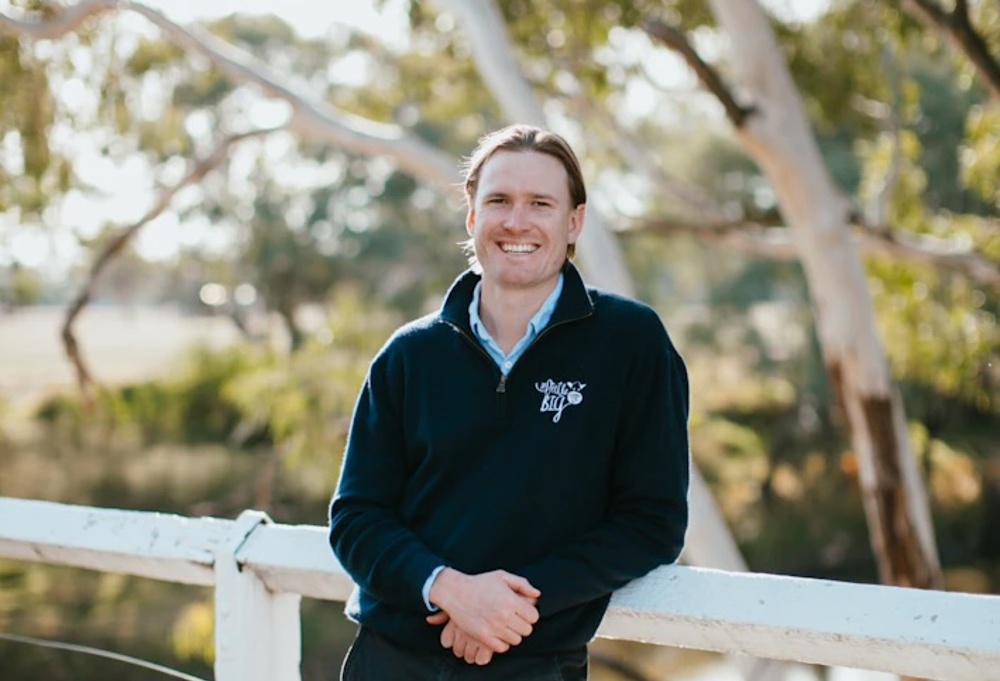
For 25 years, Australian dairy has survived by getting more efficient. Deregulation, drought, the $1-a-litre milk war and rising production costs pushed the industry towards fewer farms, larger herds, more milk per cow and, in many businesses, more debt. But NSW dairy farmer Campbell Chesworth says the challenges facing the industry now, from rising input costs and labour shortages to climate variability, cannot be fixed through efficiency alone.
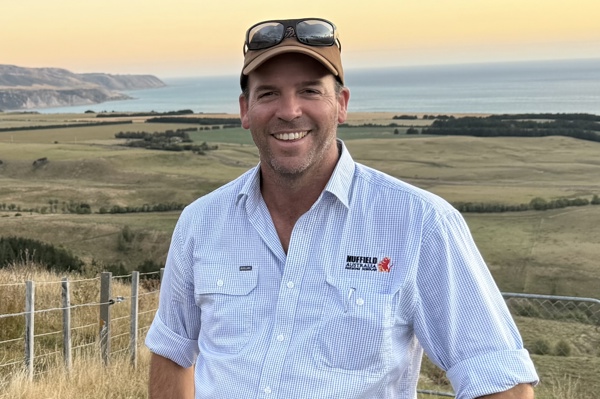
Campbell’s family moved their registered Holstein herd from the Hunter Valley to the Central West of NSW in 2004, and in 2013 began bottling their own milk on farm under The Little Big Dairy Company brand. Campbell spent more than a decade studying and working in Sydney and Melbourne before returning home in 2022. His experience in economics and infrastructure advisory shaped the way he approached his Nuffield Scholarship, which took him to leading dairy businesses across Europe, the Middle East, North and South America, and Asia.
“What I gained from Nuffield is so much more than the shopping list of infrastructure and technology I thought I would return with,” Campbell says. “It has given me a new understanding of how value is created, and recast circularity as a structural framework more so than sustainability byword.”
His report, Beyond Efficiency, argues circularity is a commercial strategy, not a sustainability project: the deliberate redesign of dairy production systems to get more value from the land, water, nutrients, energy, livestock and people already in the business.
At Lea Manor Dairy in the UK, a system designed around the needs of the cow has more than 2,600 Holsteins averaging over 12,300 litres a year, with a 50% reduction in antibiotic use and no imported phosphorus or potassium fertiliser for more than fifteen years. In Chile, Fundo El Risquillo, the world’s largest voluntary robotic dairy, cut the labour required per cow by 28% while expanding the herd. In Qatar, Baladna Dairy reduced cooling water use by around 60%.
Campbell found technology is rarely the main barrier. Most of what’s needed already exists. What decides adoption is whether the investment environment rewards long-term redesign. His recommendations include national guidelines for circular dairy production system design, stable policy settings, lending that recognises resource productivity and resilience, and supply chains that let farmers share in the value they create.
“The next stage is production system redesign: directing investment towards the constraints limiting each business and creating greater value from the resources already within it,” Campbell says. “Beyond efficiency, this is where Australia’s next competitive advantage lies.”
Campbell’s Nuffield Scholarship was funded by the RAS Foundation, Royal Agricultural Society of NSW, and NSW Nuffield Alumni, whose investment in research and leadership development is helping Australian producers build knowledge and capability to strengthen the long-term resilience of Australia’s agricultural sector.
Campbell’s full report, Beyond Efficiency: Circular economy opportunities for Australian dairy, is available on the Nuffield Australia website. He presented his findings at the 2026 Nuffield National Conference in Darwin in September.