You Can Buy a Farm. You Can't Buy a Farmer.
“A corporation can buy a farm, but it does not come with a farmer or a management system.”
You can buy the land. You can buy the machinery. What you can't buy is a farmer, or a management system that keeps a growing operation running without one person carrying the whole thing on their back. That's the challenge at the centre of a new Nuffield Australia report into how family farms can scale up without burning out the farmer in the process.
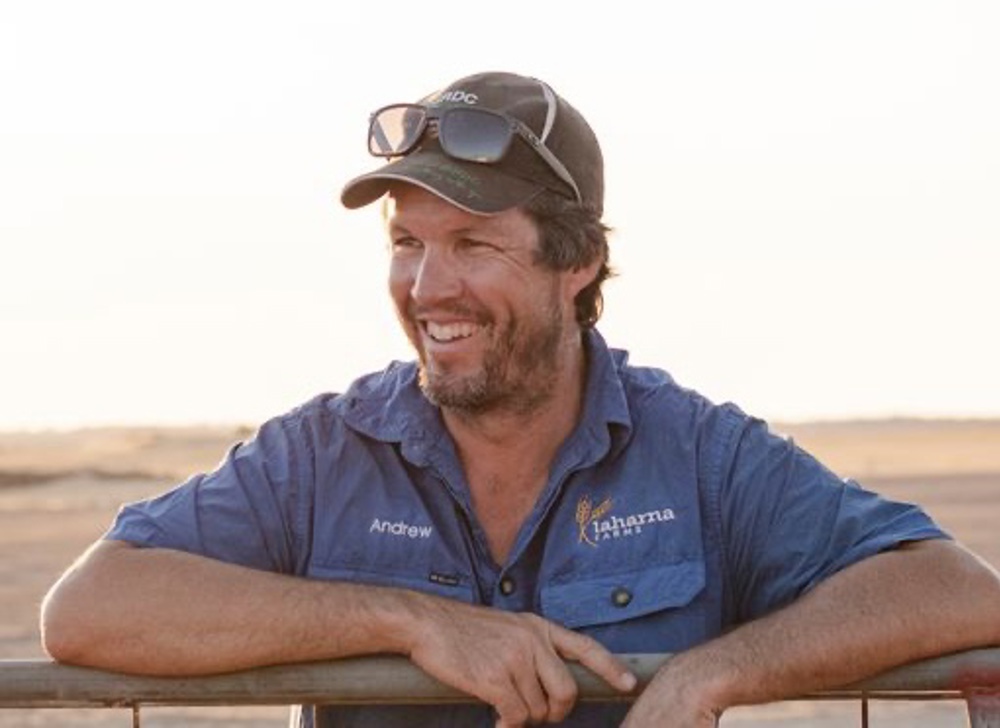
Andrew Todd, 2020 Nuffield Scholar, farms with his family at Laharna Farms in Dowerin, in WA's central Wheatbelt, cropping wheat, barley, canola, oaten hay and lupins across two properties 300km apart. Supported by the Grains Research and Development Corporation (GRDC), Andrew travelled through England, Scotland, Ireland, Poland, Romania, Ukraine and Canada to find out how growing family farms can build the systems, processes and people needed to scale, without the business becoming entirely dependent on the owner.
“A corporation can buy a farm, but it does not come with a farmer or a management system,” Andrew says. “For the financially well-resourced, land and equipment acquisitions are easy. A skilled farm manager is a rare find.”
The numbers show why this matters. Co-operative Bulk Handling's active WA grain grower members have fallen from 4,500 in 2010 to 3,500 in 2024, while the average WA cropping farm has nearly doubled in size, from 3,411 hectares in 2004 to 6,277 hectares in 2024. Fewer, bigger farms mean the traditional owner-operator model is being stretched past what one person can carry.
In Saskatchewan, Canada, Hebert Grain Ventures runs on a transparent remuneration hierarchy visible to every employee, matching one full-time staff member to every 2,500 acres farmed. Closer to home, 2024 Nuffield Scholar Ashley Wiese runs a profit-share model at Yarranabee Holdings in Narrogin, WA, rewarding key staff with a share of profit above an agreed return on investment target.
Andrew's report sets out seven recommendations for farm businesses looking to scale: professionalise management capacity, document and digitise operations, strengthen employee engagement and retention, link rewards to outcomes, create real ownership pathways for key staff, benchmark and collaborate across the industry, and prioritise work-life balance and wellbeing.
Andrew's full report is available on the Nuffield Australia website.