Putting Legumes to Work: New Research Shows How Vegetable Growers Can Reduce Nitrogen Costs and Build Soil Health
“Legumes are not a universal solution, but they are a powerful tool. With the right management, vegetable growers can use them to reduce fertiliser costs, improve soil health, and build more resilient farming systems. The science is well known, the real opportunity for growers is in the management.”
A New South Wales horticulture extension specialist is helping Australian vegetable growers rethink their approach to nitrogen, with her work showing that well-managed legumes can fix between 50 and 200 kilograms of nitrogen per hectare.
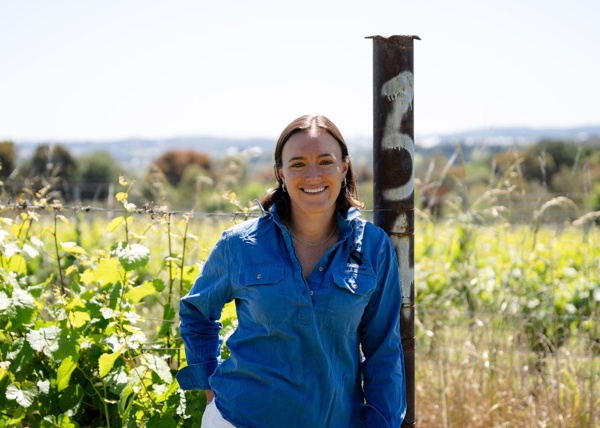
Stephanie Tabone, 2024 Nuffield Scholar and horticultural extension specialist with Applied Horticultural Research in Sydney, has released a new report exploring how to optimise the use of legumes as a nitrogen source in vegetable cropping systems. Supported by Hort Innovation, Stephanie’s research took her to the Netherlands, France, the United Kingdom and Canada, where she visited growers and researchers integrating legumes into commercial vegetable systems.
Stephanie’s report identifies the financial and environmental pressures driving grower interest in biological alternatives. Fertiliser costs account for around 8 per cent of vegetable farm income, and a recent industry survey found that 34 per cent of growers had considered leaving the industry in the next 12 months, with over half citing rising input costs as the primary reason. Synthetic nitrogen also accounts for around 17 per cent of on-farm emissions in the Australian vegetable industry, primarily through nitrous oxide losses from soil.
Stephanie has spent the past four years working alongside vegetable growers across Australia through the Soil Wealth and Integrated Crop Protection project, funded by the vegetable levy. That experience shaped the focus of her research, which combines current science with on-farm practice from some of the world’s leading vegetable producers.
Beyond the nitrogen benefits, legumes can also improve soil structure, support biological activity, build organic matter, provide a pest and disease break, and reduce on-farm emissions.
The report draws on case studies covering three main approaches. Cover cropping uses legumes between cash crops to build soil nitrogen. Companion cropping integrates legumes alongside cash crops, with examples including lupin with wheat and field bean with triticale. Legume cash crops are grown to deliver both income and a nitrogen contribution to the next crop in the rotation.

A consistent theme across all three approaches is timing. Research shows that between 10 to 30 per cent of the nitrogen fixed by a legume is taken up by the next crop. The rest is mineralised slowly, lost to the environment, or stored in soil organic matter. Getting more of that nitrogen into the next crop comes down to species choice, termination timing, residue management and soil and environmental conditions.
For growers wanting to start, Stephanie recommends trialling legumes in strips or paddocks ahead of nitrogen hungry crops like brassicas or corn, and using simple tools such as soil and sap tests, biomass cuts, and basic nitrogen budgets to inform fertiliser decisions. She also suggests reducing fertiliser modestly at first and adjusting over time with monitoring, rather than making large changes in the first season.
The report also calls on industry to invest in on-farm demonstrations and peer learning networks that connect growers; to improve access to legume seed including diverse and native species; and to recognise long term soil building practices through sustainability incentives that go beyond yield.

One of Stephanie’s clearest findings was that mindset matters as much as agronomy. The growers and researchers she met overseas observed their soils closely, trialled new approaches, and refined their systems over time, drawing on intuition and principles as much as measurement.
Stephanie’s Nuffield Scholarship was supported by Hort Innovation, whose continued investment in horticultural research, development and extension is helping Australian growers build more productive, profitable and sustainable businesses.
Stephanie’s full report, Optimising the use of legumes for nitrogen supply to vegetable crops, and her presentation at the 2025 Nuffield National Conference in Adelaide, are available on the Nuffield Australia website.
Applications for the 2027 Nuffield Australia Scholarships are now open.
Are you ready to challenge the status quo and shape the future of Australian agriculture? A Nuffield Scholarship is your opportunity to explore global best practices, connect with industry leaders, and bring innovative ideas back to your business and community.
Apply now: www.nuffield.com.au/how-to-apply