Surface tile drainage and nutrient management to create more efficient farming practices
“In our high rainfall zones, drainage isn’t just about getting water off paddocks. It’s about keeping soils aerobic, improving nutrient efficiency, and protecting the environments we farm alongside.”
A fourth-generation farmer in Western Australia’s South West is calling for smarter, better-planned drainage systems to lift productivity while strengthening environmental outcomes in high rainfall farming zones.
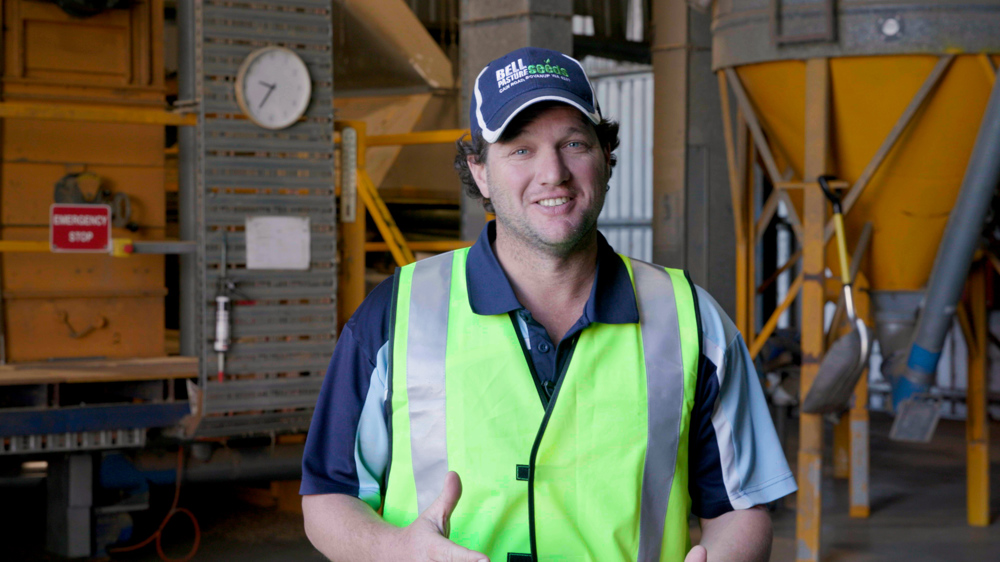
Robert Bell, 2021 Nuffield Australia Scholar, supported by AgriFutures Australia, has released his report Surface tile drainage and nutrient management to create more efficient farming practices, exploring how subsurface “tile” drainage, combined with best-practice nutrient management, can reduce waterlogging, improve crop performance and help manage nutrient loss from farming catchments.
Robert’s interest in tile drainage was sparked after a severe wet season in 2016, when rainfall exceeded 1,160mm in his coastal farming area, leading to significant crop losses and poor fertiliser efficiency.
In 2020, his family business launched a subsurface drainage trial, comparing tile drains with conventional laser-mapped surface drainage. The results were striking. In 2021, with annual rainfall of 963mm (well above the long-term average), the undrained control area yielded 900kg/ha, while the drained area produced more than 4,200kg/ha.
“Those early trials made it clear there was a better way to manage waterlogging, but they also raised bigger questions around cost, design, and what happens to nutrients once water leaves the paddock,” Robert said.
Through his Nuffield Scholarship, Robert travelled to New Zealand and the United States, including the Farm Progress Show in Iowa and the 11th International Drainage Symposium in Des Moines, learning from global leaders in drainage design, installation methods and edge-of-field nutrient mitigation.
His report highlights that tile drainage can improve trafficability and timeliness of operations, support more consistent yields, and help maintain aerobic soils, but also notes that systems must be designed carefully to manage downstream impacts.
A key finding from monitoring associated with Robert’s WA trial was that while tile drains reduced phosphate losses compared to open drains, they were associated with increased nitrate export. This prompted a strong focus on edge-of-field practices such as woodchip bioreactors, saturated buffers, oxbows and wetlands, and the potential for drain water recycling to keep water and nutrients on-farm.
“Australia has an opportunity to get ahead of the curve, and to build nutrient management into tile drainage planning from the start, not after regulation forces the issue,” Robert said.
The report also points to emerging opportunities for Western Australia as tile drainage expands, including the need for greater local expertise, improved access to materials and fittings, and stronger collaboration between industry, researchers and government.
2027 Nuffield Scholarship applications are OPEN. Close Friday 8 May.
Influence what comes next in Australian agriculture.
Learn more and apply HERE